
- Company: Kaggle
- Platforms: Web, Web Browser
- Updated on: February 24, 2026
- Status: Unverified
- Company: Kaggle
- Updated At: February 24, 2026
- Editor Rating: 4.6
- Platform: Web, Web Browser
Kaggle offers a robust platform for data analysis and machine learning, providing users with essential tools and resources.
- Analyzer, Assistant, Framework
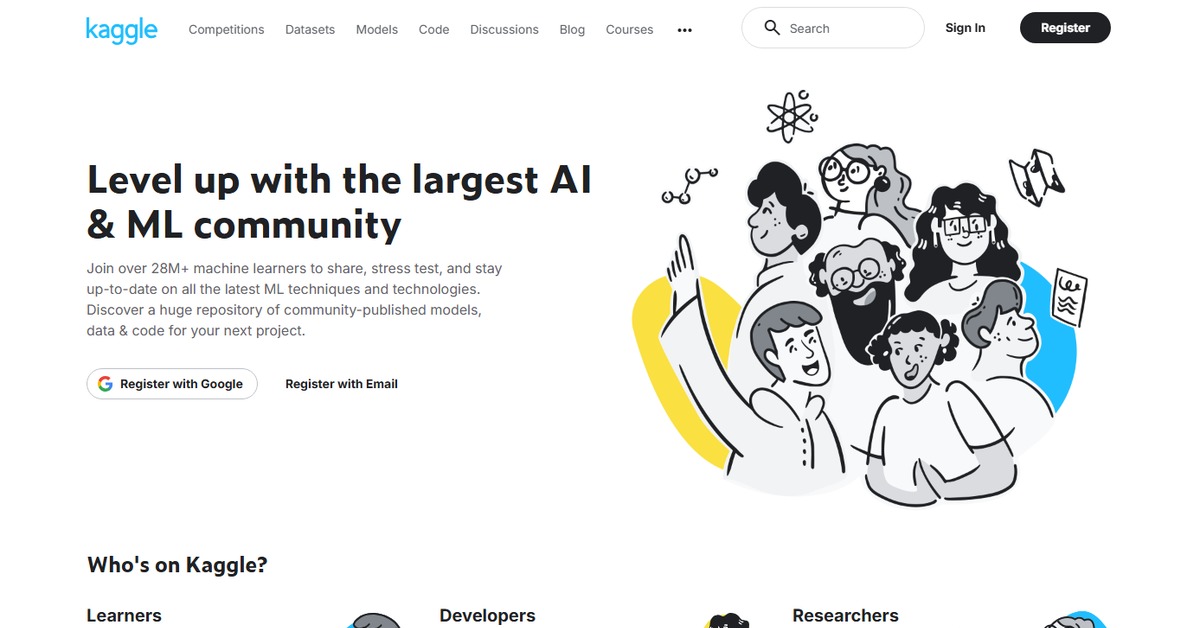
Overview of Kaggle
Kaggle is a leading platform in the data science community, designed to facilitate data analysis, machine learning, and collaborative projects. It serves as a hub for data enthusiasts, providing access to datasets, competitions, and a vibrant community of practitioners. The platform is essential for anyone looking to enhance their data skills, whether they are beginners or seasoned professionals. Kaggle addresses common challenges faced by data scientists, such as finding quality datasets and engaging with a community for support and collaboration. Unique capabilities include hosting competitions that allow users to test their skills against others, as well as providing a comprehensive suite of tools for data visualization and analysis. Practical use cases range from academic research to industry applications, making Kaggle a versatile choice for various users. The realistic benefits include improved data literacy, networking opportunities, and access to cutting-edge tools and resources.
Key Features
- Access to a vast repository of datasets, enabling users to find the right data for their projects.
- Competitions that challenge users to solve real-world problems, fostering a competitive spirit and learning.
- Integrated coding environment (Kernels) that allows users to write, run, and share code seamlessly.
- Community forums for discussion, collaboration, and sharing knowledge among data enthusiasts.
- Tools for data visualization and analysis that simplify the process of deriving insights from data.
Pros & Cons
Pros.
- Extensive dataset library that caters to various fields and interests.
- Active community support that enhances learning through collaboration.
- Competitions provide practical experience and recognition in the data science field.
- User-friendly interface that simplifies navigation and project management.
- Robust tools for data analysis that are accessible to both beginners and experts.
Cons.
- Some advanced features may require a learning curve for new users.
- Limited direct support options, relying heavily on community forums.
- Competitions can be highly competitive, which may discourage beginners.
- Data quality can vary significantly across different datasets.
- The platform may not cater to niche data science needs.
How to Use (Quick Start)
- Create an account on Kaggle’s website.
- Explore available datasets and select one that interests you.
- Download the dataset or use it directly in Kaggle’s environment.
- Utilize Kaggle’s kernels to write and execute your code.
- Analyze the data using built-in libraries and tools.
- Participate in competitions to apply your skills and gain feedback.
- Engage with the community through forums and discussions.
- Share your findings and insights with others on the platform.
FAQs of Kaggle
What is Kaggle used for?
Kaggle is primarily used for data analysis, machine learning, and participating in data science competitions.
Is Kaggle free to use?
Yes, Kaggle offers a free tier with access to basic features and datasets.
Can I upload my own datasets to Kaggle?
Yes, users can upload their own datasets for public use or private projects.
What types of competitions does Kaggle host?
Kaggle hosts a variety of competitions ranging from predictive modeling to data visualization challenges.
How can I improve my skills on Kaggle?
Participating in competitions, engaging with the community, and utilizing available tutorials can help improve your skills.
Are there any prerequisites to use Kaggle?
While there are no strict prerequisites, a basic understanding of data science concepts and programming is beneficial.
Can I collaborate with others on Kaggle?
Yes, Kaggle allows users to collaborate on projects and competitions, fostering teamwork and knowledge sharing.
Related AI Tools
No results found.